- Auto Tinting
- Auto Wrapping
- Car Paint Protection
- Tesla
- Residential Tinting
- Commercial Graphics
- Commercial Tinting
- About Us











Carbon Window Tint – Clean Look with Strong Heat Control
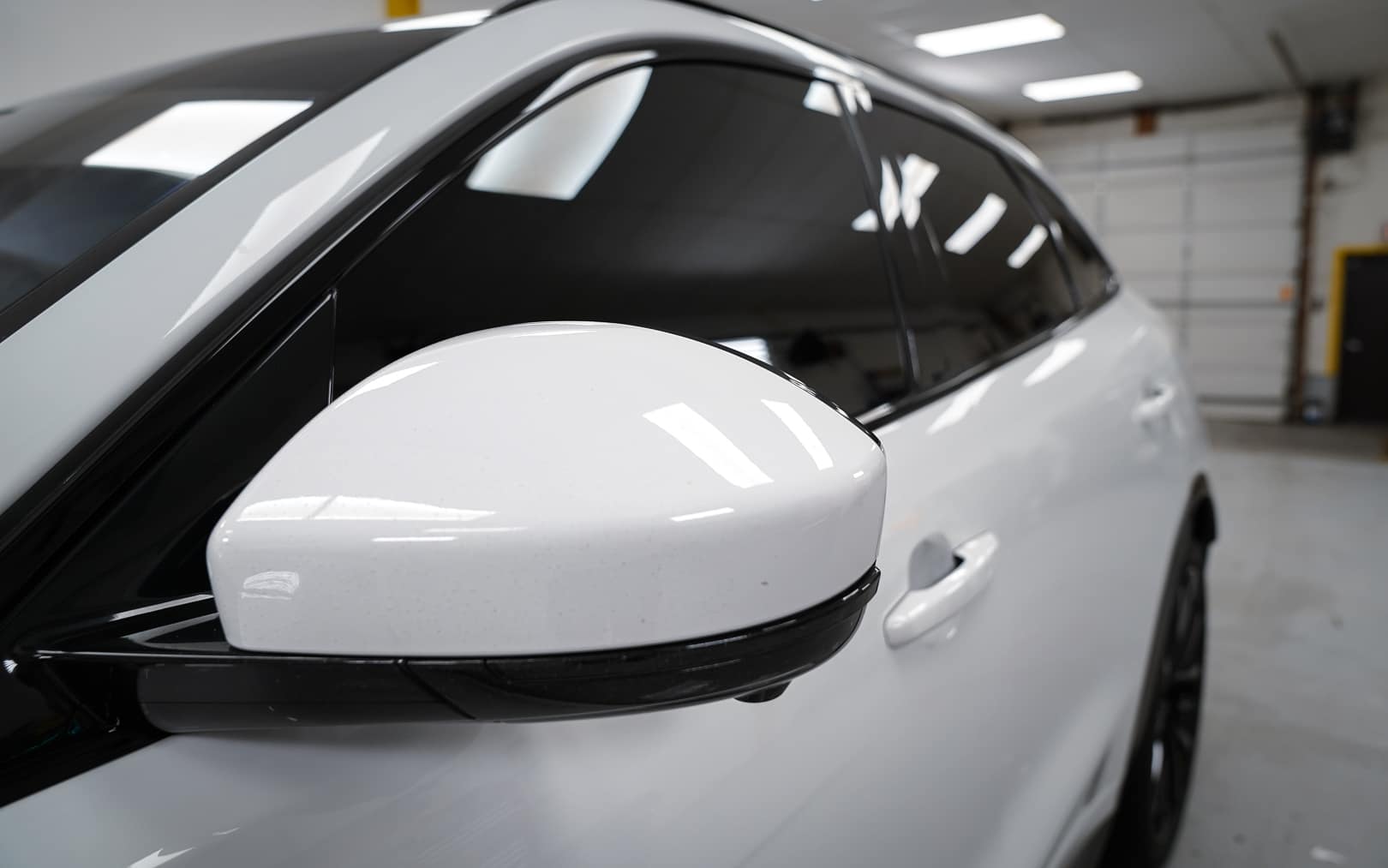
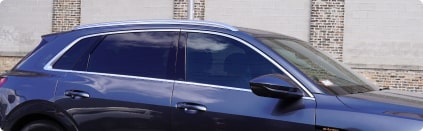
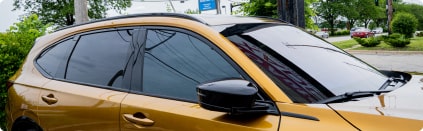
Carbon window tint is a favorite for drivers who want more than basic shade. It gives your car a deep, matte look and helps cut heat on sunny days. In Chicago, we see it work great on daily drivers, family SUVs, and work trucks that sit outside a lot.
Carbon film is also a nice middle option. It costs more than dyed tint, but it often lasts longer and holds its color better. And it costs less than ceramic tinting. If you want a cooler cabin and a darker rich look without the “shiny” feel of metallic film, carbon tint is worth a close look.
Our packages Recent reviews
What is Carbon Window Tint?
Carbon film does not contain metal, so there are no problems with mobile phone and radio reception. Carbon tinting is dark and matte, giving it a stylish look.
In addition, the carbon in the film blocks about 40% of the infrared light (which causes heating) that penetrates through the windows. In terms of heat blocking efficiency, it is roughly the same as other types of film; its use effectively cools the room and also helps prevent upholstery from fading.
This means that the air conditioner will not have to work as hard in the summer, and the heating system will also have an easier time in the winter. Unlike dyed film, carbon film does not fade over time.
Check the table below for details. Secure your spot by clicking.
Book appointment- Windshield Strip: $70–$200 (based on film)
- Sunroofs: $70–$500 (per panel/size)
- Tint Removal: $120/hr labor rate
| View all packages | XPEL CS | XPEL XR | XPEL XR+ |
| 2 front side windows | from $109 | from $149 | from $209 |
| coupe, 4-door sedan, sides and rear window | from $249 | from $379 | from $609 |
| SUV/Pickup, sides and rear window | from $279 | from $409 | from $659 |
| windshield for Coupe/Sedan | from $169 | from $219 | from $339 |
| windshield for SUV/Pickup | from $169 | from $219 | from $339 |
| Optional Add-ons: |
|||
| Note: 20+ year old vehicles ($100 surcharge) | |||
| 1000+ reviews |
What are the Pros of Carbon Film?
The choice of window tinting for cars has gone beyond general aesthetic appeal. Technologies have evolved from simple colored films (which fade and bubble) and metallized films (which block signals) to sophisticated and refined types.
Let’s look at the main benefits of carbon window tinting for your car:
Absorption of Harmful Ultraviolet Rays
Carbon particles are added to carbon window tinting. These particles are very effective at blocking and absorbing infrared radiation. When solar energy hits the glass, the carbon film acts like a sponge, absorbing IR energy and preventing it from entering the interior. The heat is then slowly dissipated and radiated through the glass as the car moves.
This is a huge improvement over regular film. A good carbon film will absorb 50 percent or more of the total infrared heat, which significantly increases the temperature in the passenger compartment.
Durability
Carbon films do not contain dye; the color is created by stable carbon particles. The color is stable, does not fade, and does not turn purple.
Comfort and Reasonable Price
Carbon film is the leader in terms of performance characteristics. It provides the vast majority of drivers with exactly what they need:
- Excellent protection from ultraviolet radiation (99%+)
- High level of heat dissipation (through absorption)
- Elegant appearance, authentic deep black color that does not wear out.
- No signal interference
Carbon tinting offers a huge advantage in comfort and protection compared to any factory or painted film, and at a reasonable price. It is a sensible and smart choice for those who want a high-quality appearance and good performance, but don’t want to pay a high price.
What are the Cons of Carbon Tint?
Firstly, although carbon film microparticles are effective, they are larger than ceramic film nanoparticles. In some cases, carbon films can cause a slight decrease in visual acuity or slight cloudiness, especially when viewed at an angle.
Second, carbon film is more expensive than metal and standard window tinting.
In addition, purchasing low-quality or excessively dark film (e.g., 5% light transmission) significantly reduces visibility at night and in bad weather.
Does Carbon Tint Fade?
High-quality carbon tint is designed to maintain its color. Carbon film does not only use dye but also carbon-based layers that stay stable in the sun. This is why a lot of carbon films stay black for a long time. Some brands claim that the film should not change color, and they offer long warranties as a guarantee.
In our shop, we install XPEL films. On most daily drivers, carbon film still looks the same after 5+ years. On cars that live outside all day, every day, we may see mild lightening closer to 7–10 years. True “purple tint” is rare with quality film.
Here are a few common mix-ups:
| What you see | What it usually means |
|---|---|
| Haze in the first week | Normal dry-out, not fading |
| Tiny bubbles at first | Moisture, it often clears |
| Color looks lighter at some angles | Light and glass angle, not damage |
Myth: “Darker shades fade faster.” Not really. Film quality and sun exposure matter more than the shade percent.
Can You See at Night with Carbon Tint?
Yes, if you choose the right shade, you can see at night with carbon tint. The most important thing is VLT, which measures the amount of light that can pass through the film. It’s easier to watch a lighter film at night. A darker film provides more privacy but may be too dark when driving on dark roads.
If you drive at night or in the rain, or if you park on the street often, we recommend applying 35% tint on the front doors for a better and safer view. 20% tint works well for some drivers, but it all depends on your eyes, your headlights, and how dark your car’s interior is. The inside of a car with black interiors looks darker than one with tan interiors.
Backup cameras are helpful when your rear window is very dark, but don’t forget that your side mirrors are still important. If you prefer a dark appearance, make sure the front windows are slightly lighter. It’s more even now.
How to Choose the Best Carbon Window Film?
Carbon film is not all the same. Some looks clean for years. Some gets hazy or looks “off” in certain light. We see the difference when cars come back for a second tint job.
Here’s what we tell customers to check first:
- Pick the right shade for your life. Night drivers should stay lighter up front.
- Ask about warranty and installer work. A good film still needs a clean install.
- Look for clear optics. You want sharp views, no milky look.
- Check heat and UV numbers. Compare films side by side, not by price only.
For example, SunTek Carbon is a nice everyday choice, SunTek CXP often has better heat control. 3M Color Stable is known for steady color over time. And Solar Gard Endeavor is also a strong mid-range option with good comfort.
If you tell us your budget and how you drive, we can point you to the best match fast.
Conclusion
The choice is yours, depending on your needs, climate, budget, and performance.
Choose carbon film if you have a moderate budget but want a high-quality product that will last a long time. UV protection, privacy, and a significant (but not excessive) reduction in temperature are your main goals. It’s also a great option if you want a vintage, pure black look that will never go out of style.