- Auto Tinting
- Auto Wrapping
- Car Paint Protection
- Tesla
- Residential Tinting
- Commercial Graphics
- Commercial Tinting
- About Us











Dyed Window Tint: A Simple, Budget-Friendly Shade for Your Car
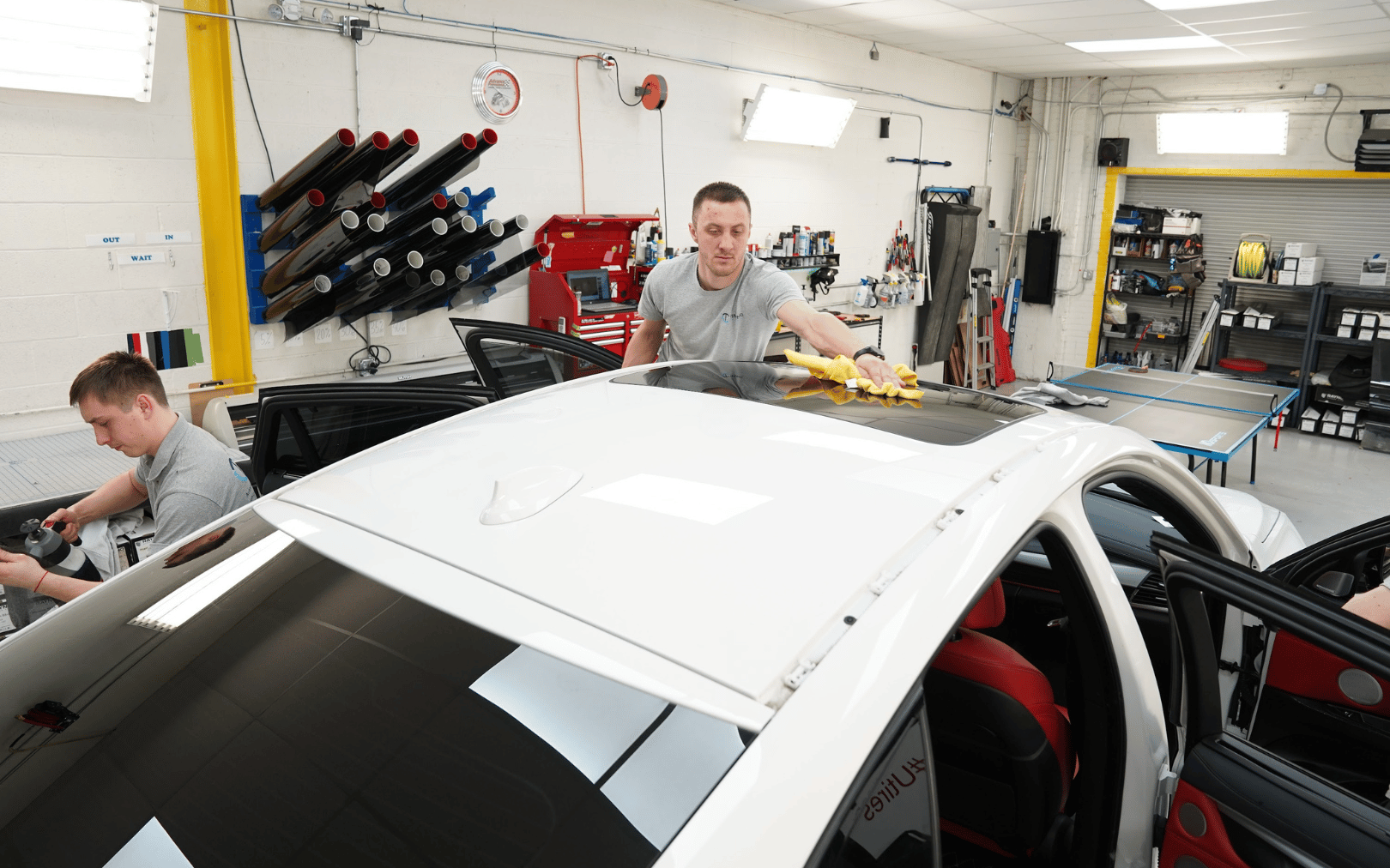
Many people desire a darker look and some privacy, without wanting to spend too much money. This is where dyed window tint is used. We put tint on cars in Chicago, and every week we see people choosing this type of film. It reduces glare on sunny days and can make the inside of the car feel a little less hot. It also provides your car with a smooth, uniform color.
In this guide, we will explain what dye tint is, what it does well, what it does not, and how we install it.
Our packages Recent reviews
What is Dye Tint?
Dyed films are inexpensive, but at the same time high quality. In such films, the darkening pigment (paint) is added to the adhesive layer, while higher-quality dyed films have an intermediate layer of dyed film. It reduces glare, provides privacy, and gives the glass an even tint.
This film is often referred to as “standard tinting” or “regular tinting.” Many drivers choose it because it looks good and is less expensive than other options. Increased comfort and quality – what more could you want?
Tinted film mainly blocks some of the light. It can also somewhat lower the temperature, but it’s not the most effective option for controlling heat. If you want your eyes to look darker and less shiny, then tinted lenses are a good choice.
Remember that low-cost tinted film may lose its color over time. Higher quality brands of window film will hold their color for a longer period of time compared to lower quality brands. However, even with dyed film, the color can still fade over time from being in the sun.
Check the table below for details. Secure your spot by clicking.
Book appointment- Windshield Strip: $70–$200 (based on film)
- Sunroofs: $70–$500 (per panel/size)
- Tint Removal: $120/hr labor rate
| View all packages | XPEL CS | XPEL XR | XPEL XR+ |
| 2 front side windows | from $109 | from $149 | from $209 |
| coupe, 4-door sedan, sides and rear window | from $249 | from $379 | from $609 |
| SUV/Pickup, sides and rear window | from $279 | from $409 | from $659 |
| windshield for Coupe/Sedan | from $169 | from $219 | from $339 |
| windshield for SUV/Pickup | from $169 | from $219 | from $339 |
| Optional Add-ons: |
|||
| Note: 20+ year old vehicles ($100 surcharge) | |||
| 1000+ reviews |
How is Standard Film Manufactured?
Standard tinted film is made from transparent polyester. This sheet is the base. It is thin, durable, and designed to fit tightly to the glass.
Next comes the coloring process. The manufacturer adds dye to the film to make it look darker. Some films use a colored layer. In others, the polyester is impregnated with dye. In either case, the goal is the same: to achieve an even shade that looks the same across the entire surface.
After that, a top layer is applied to protect your car from scratches. The final layer is an adhesive layer and a protective backing. The backing remains in place until the day of installation. Then we remove it, spray the glass, and install the film.
When people ask why one standard tint is more expensive than another, this is usually the reason. Better materials, better dye, and better top layers make a big difference.
Pros and Cons of Dyed Window Tint
This type of tinting is very popular in the US. Our customers choose dyed film in particular because of these advantages:
- usually the most affordable option;
- does not interfere with GPS signals (as it does not contain metal);
- quick to install (which makes tinting cheaper);
- manufacturers offer a wide variety of shades;
- looks good when installed neatly.
Dyed films are one of the most affordable tinting options, but they also have their drawbacks:
- the heat reduction is weaker, especially in hot weather and in traffic jams.
- over time, the dye may fade or change color (especially on large windows).
- if the film is cheap, there is a higher risk of it looking worn after a couple of seasons.
Is Dyed Film Tint Good?
Certainly, dyed film can be a suitable option if it fulfills your needs. It’s a good choice for drivers who want a darker tint, more privacy, and less glare without having to spend more money on it. It also provides cars with a smooth, even tint on their windows, which looks neat on most vehicles.
However, dyed film is not the best option for temperature control. If you want to minimize the temperature in the cabin, ceramic film may be a better choice. Standard film is more focused on appearance and comfort than on maximum cooling.
We recommend regular film for everyday drivers, company cars, and older vehicles where the goal is simple: good shade, good style, reasonable price.
How Long Do Dyed Tints Last?
Dyed tints can last a few years, and sometimes longer, but it depends on the film quality and how the car lives. A car that sits outside in full sun every day will wear tint faster than a car that stays in a garage.
In our shop, we install XPEL films, and we see a better life from quality products. With good dyed film, many customers get around 3 to 5 years of nice color. After that, some films may start to look a bit lighter or show a color shift. Cheaper film can change sooner, and it may turn more purple or look uneven.
We’ve also seen XPEL hold up well when the windows get cleaned the right way and the defroster lines are treated with care.
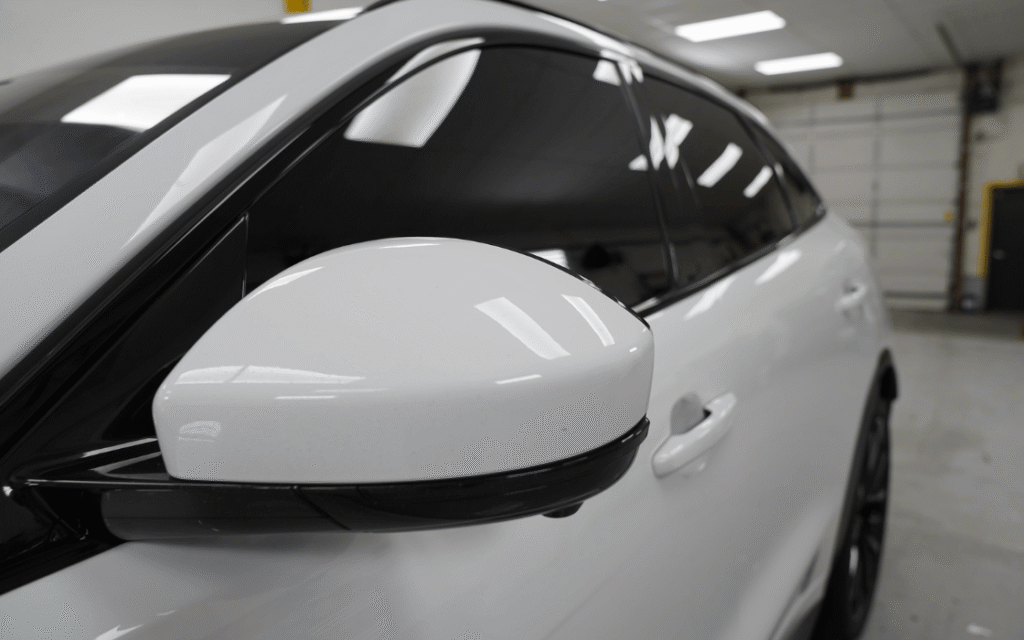
Dyed Tint Shade Options and What They Look Like
Below are common dyed tint shades and the look you can expect.
70% Shade
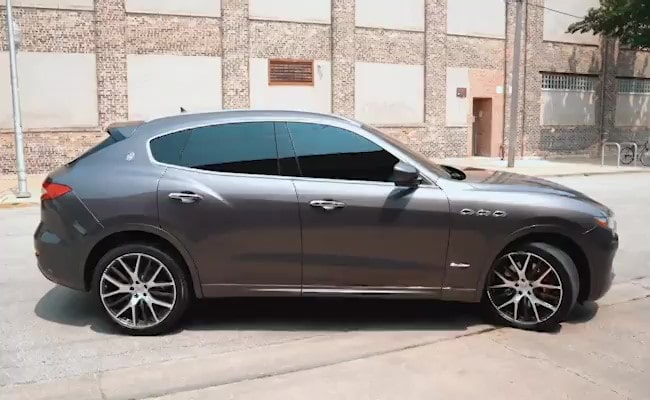
This is so light. It appears almost transparent from the outside, just a light smoke color. If you want a clean look with less glare, but not dark glass, then this is a good option. A lot of people choose this for their car’s windshield where it is allowed by law.
50% Shade
This tint is light but still looks natural. It allows for easy visibility inside the car during the day, while also reducing the glare of the sun and giving the glass a softer appearance. It is effective for front doors and matches nicely with many factory windows for a neat look.
35% Shade
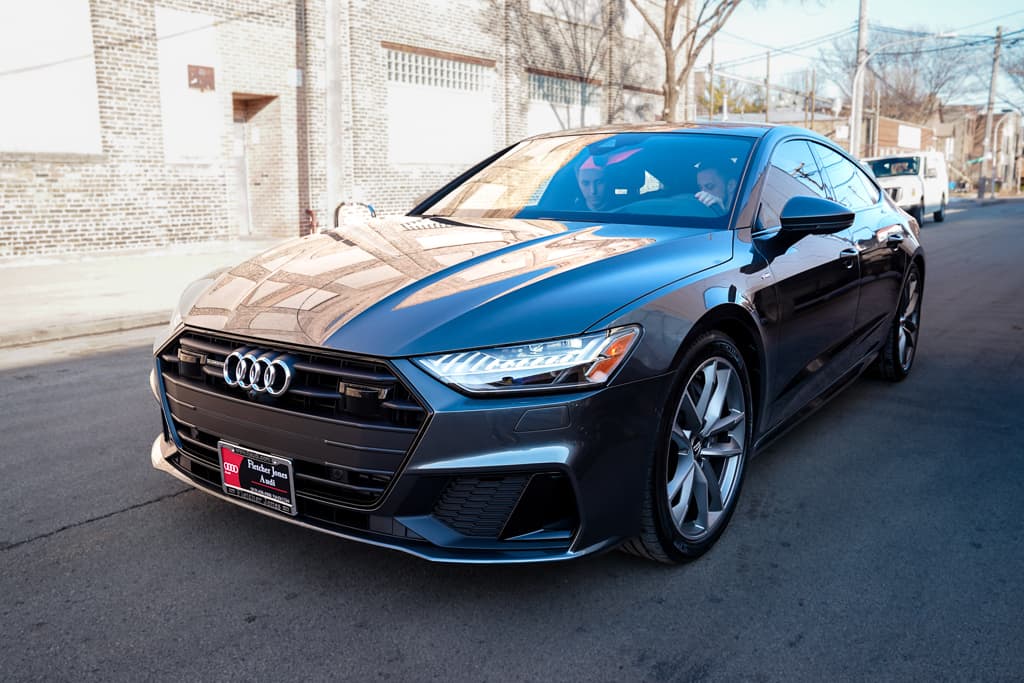
This shade is the most commonly used for everyday wear. It appears to have a slight tint, but it’s not very dark. During the day, you have pretty good privacy. Most drivers are still comfortable driving at night.
20% Shade
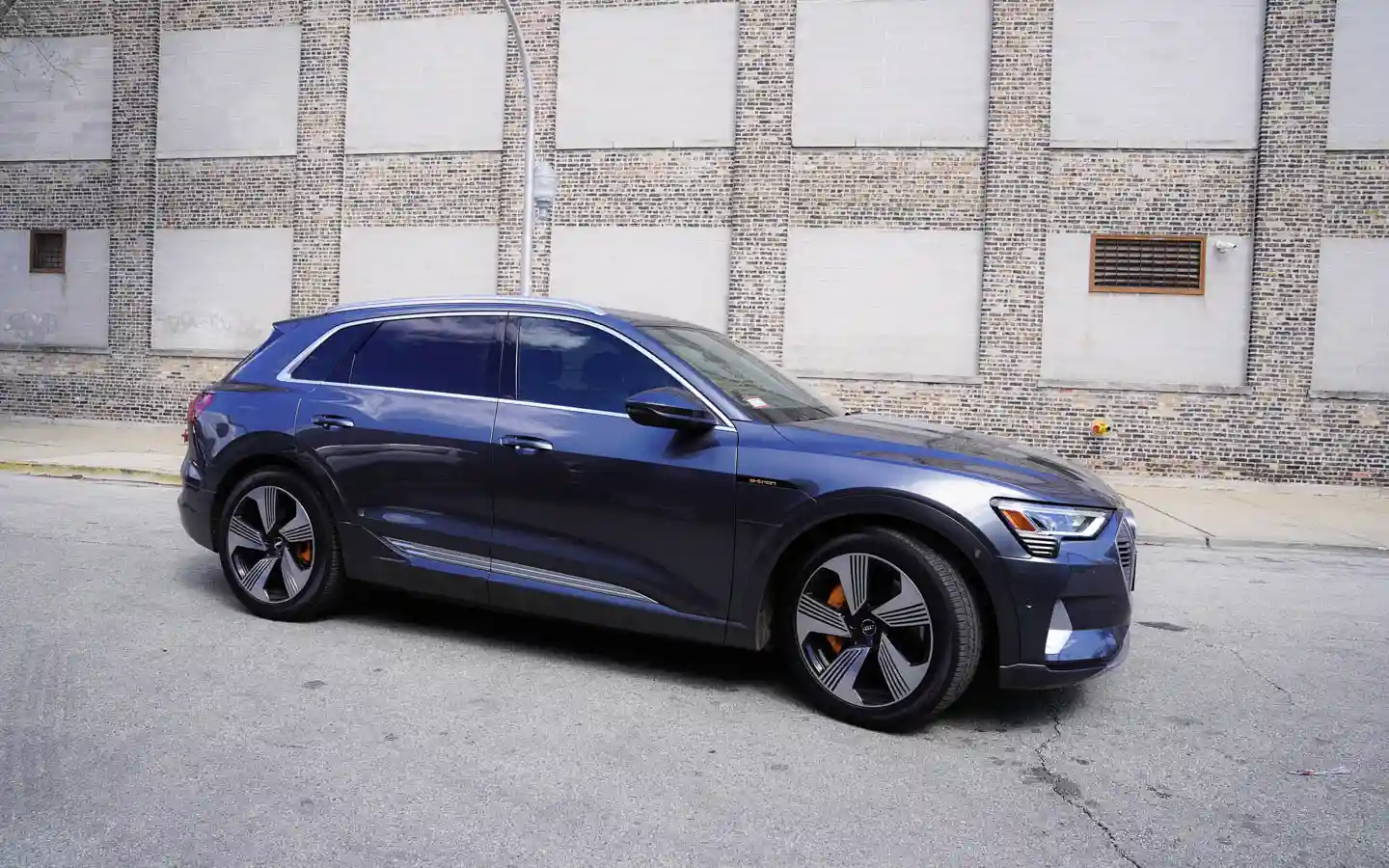
This one appears to be dark and provides genuine privacy. It’s more difficult to see inside the cabin from the outside, especially on SUVs and sedans with black interiors. It may seem fine, but it’s harder to see at night. So, we’ll discuss it before you decide on it.
5% Shade
This is very dark. The bold style. Good for keeping privacy on the back doors and back window, but it may be too dark for drivers if used on the front windows. We frequently use it as an option only for the back.
How Do We Install Regular Tint in Chicago?
Before installation, we help you choose the right type of film. The tinting process is then roughly the same for any type of film:
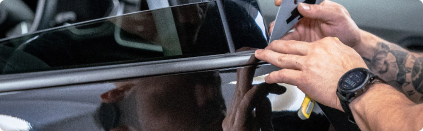
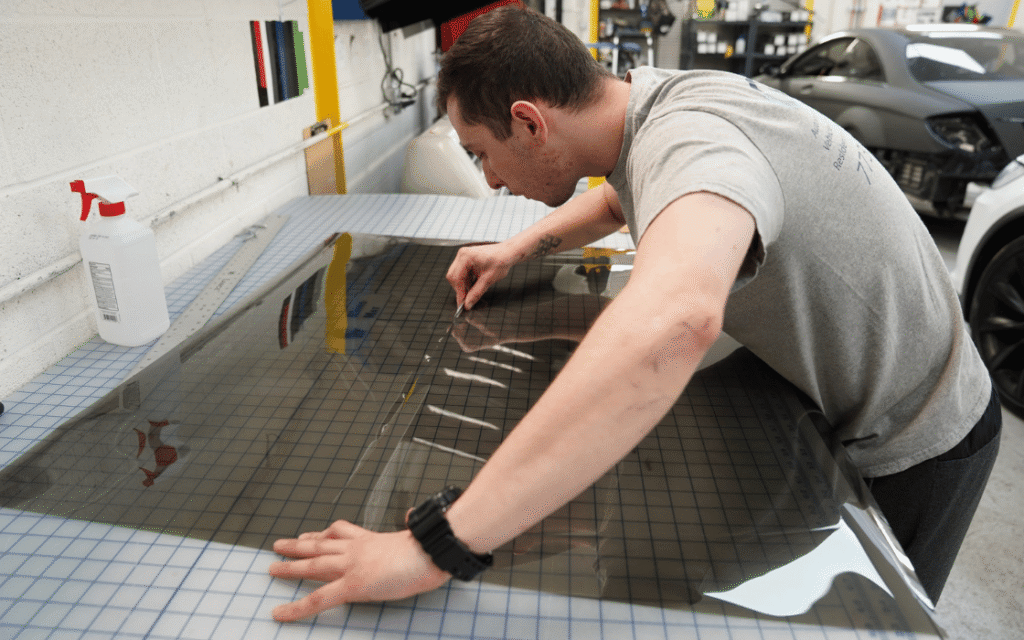
- First, our window tinter degreases the glass surface inside the cabin using cleaning chemicals. If the glass has been tinted before, we will take care of removing any adhesive residue.
- Next, the specialist thoroughly dries the glass.
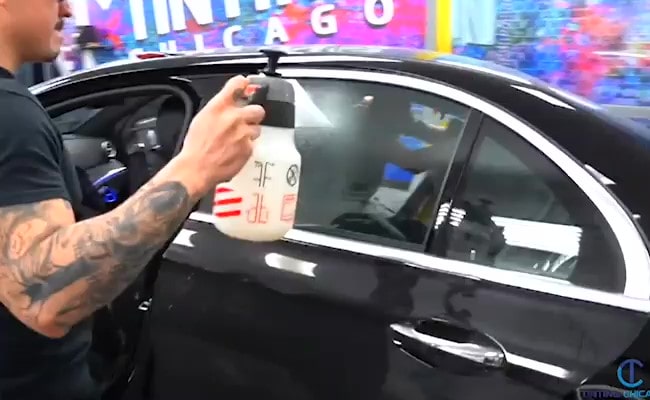
- After that, a special liquid is applied to the glass and the tint is glued on.
- Then we level the surface and remove any remaining moisture with a spatula.
- Once the adhesive is 100% dry, the window tinter trims the edges of the film evenly along the glass.
Conclusion
Dyed window tint is a solid choice when you want a darker look, more privacy, and less glare without a big price tag. It gives your car a clean, even shade and it does not mess with GPS or radio signals. The tradeoff is heat control. It helps a little, but it is not the best for hot days or long traffic. Film quality matters a lot, so we stick with XPEL and install it the right way. If you want a good-looking tint for daily driving in Chicago, dyed film is often the one that makes sense.