- Auto Tinting
- Auto Wrapping
- Car Paint Protection
- Tesla
- Residential Tinting
- Commercial Graphics
- Commercial Tinting
- About Us











Pros and Cons of Metallic Window Film for Your Car
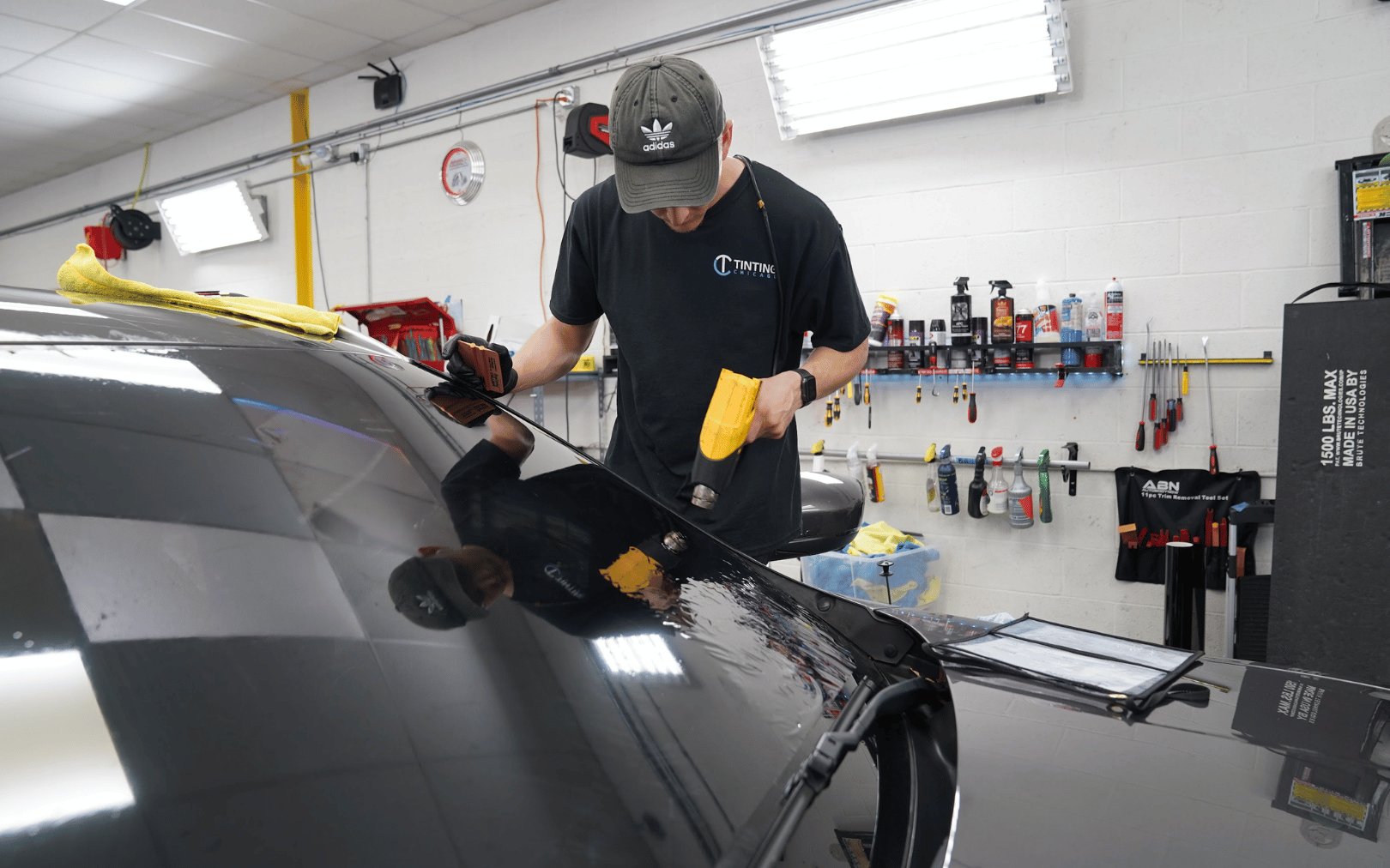
Metallized window film is in high demand among car owners who decide to tint their car windows. It is manufactured by spraying aluminum ions, which give the tinting material good light-reflecting properties. Despite its impressive appearance, this film has some drawbacks, one of which is its high cost.
Therefore, today we will look at the pros and cons of metallic window tint, as well as its service life (based on our experience of tinting cars at Tinting Chicago).
Our packages Recent reviews
What is Metallic Film?
This type of tinting reflects heat and blocks light thanks to the tiny metal particles added to it. Highly resistant to scratches, it makes the glass more durable and increases its resistance to breakage.
The main advantages of dark metallized window coatings include the ability to:
- block heat;
- protect from light;
- prevent ultraviolet rays from entering.
Metallized film will serve for a long time and will not lose its excellent technical characteristics during operation.
If you are looking for a good balance between quality and price, consider metallized films. They provide decent protection from the sun and heat, are highly durable, and are resistant to fading. However, keep in mind that they may interfere with mobile communications and navigation, especially if you plan to tint the front windows.
Check the table below for details. Secure your spot by clicking.
Book appointment- Windshield Strip: $70–$200 (based on film)
- Sunroofs: $70–$500 (per panel/size)
- Tint Removal: $120/hr labor rate
| View all packages | XPEL CS | XPEL XR | XPEL XR+ |
| 2 front side windows | from $109 | from $149 | from $209 |
| coupe, 4-door sedan, sides and rear window | from $249 | from $379 | from $609 |
| SUV/Pickup, sides and rear window | from $279 | from $409 | from $659 |
| windshield for Coupe/Sedan | from $169 | from $219 | from $339 |
| windshield for SUV/Pickup | from $169 | from $219 | from $339 |
| Optional Add-ons: |
|||
| Note: 20+ year old vehicles ($100 surcharge) | |||
| 1000+ reviews |
Is Metallic Tint Legal?
Metallic tint can be legal in the U.S., but the rules are not the same everywhere. Each state sets limits for how dark your windows can be and how reflective the film can look. Metallic film can look more “shiny” than dyed film, so it may break the reflectivity rule in some states even if the shade looks fine.
There is also a federal point that matters for shops. NHTSA has said that a business cannot add film if it drops light pass-through below what the federal glass standard requires for certain windows. That’s why a pro shop should check the numbers, not guess.

What to Know About Metallic Window Film?
Metallized films are more difficult to manufacture than non-metallized films and are therefore generally more expensive within the same brand. However, metallized films are more popular with tinters and customers than non-metallized films because they have two clear advantages over conventional non-metallized films.
Advantages of Metallic Tinting
The first advantage is greater heat reflection efficiency. The metal sprayed on the outer layer forms a kind of thermal mirror that reflects a significant portion of the heat flow falling on the glass with the film. Together with the lower dyed layer, which absorbs the heat flow, these layers work very effectively in tandem, especially in mirrored films.
Until the advent of special athermal films, which use nanoceramic particles instead of pigment dyes and metallization, this hybrid structure was the most popular method of increasing the heat reflection efficiency of films.
The second advantage is that, in addition to protecting against heat, the metallized layer protects the lower layers from premature burnout, which extends the life of the film. Metallization, by reflecting heat, reduces one of the factors of burnout of the lower colored layers, namely the component of dye decomposition that occurs due to heating of the film.
The durability of the colored layers also depends on the materials from which the pigment dyes are made and the quality of the coloring, but within the same brand, when using the same dye, all other things being equal, metallized films are definitely more durable.
Other advantages of high-quality metallic window tint:
- Lightly metallized structure. This makes the film effective at reflecting sunlight and preventing its harmful effects.
- Classic black tint. The neutral black tint of the film makes it aesthetically appealing, without a mirror-like shine.
- Wide range of VLT. Manufacturers offer a wide range of VLT (Visible Light Transmission) options, allowing you to choose the most suitable option for your vehicle.
Disadvantages of Metallized Tints
One of the disadvantages of aluminum ion-based coating film is legal restrictions on its use. In other words, this type of film can only be applied to rear windows due to its low light transmission.
Metallized tinting material is easily scratched, and damage to the decorative layer detracts from the aesthetic appearance of the glass. Due to the low resistance of such film to abrasive effects, the care of tinted windows requires the use of contactless washing. Fingerprints are very noticeable on metallized film, and the removal of difficult stains such as tar and tree resin is unlikely to leave no trace on such material.
Many drivers, when getting out of their cars, habitually look through the windows to check the interior for forgotten items. If the car is tinted with metallized film, such a check will be impossible, as the driver will only see their own reflection.
How Long Does Metallic Tint Last?
Metallic tint usually lasts longer than cheap dyed film. In real life, we often see 5 to 10 years from a good metallized film. Cars that live outside every day tend to land closer to 5–7 years. Garage-kept cars can look good at 8–10 years.
In our shop, we see older metallic jobs come back when the edges start to peel, small bubbles show up, or the film looks hazy. The metal layer can help with scratch resistance, so the surface often stays nicer than basic film. Still, heat, sun, and moisture can wear down any tint over time. If the film starts to look patchy, it’s usually time to replace it.
When Metallic Tint Makes Sense and When It Does Not
The metallic tint is a film that people either love or hate. In our store in Chicago, we often have customers who choose it for its strong sun protection and durable surface. On sunny days, it may seem like a big change from using regular colored film. The cabin remains calmer, and the glass looks strong and steady.
However, metallic tint may not be suitable for every car or driver. The metal layer may lead to problems with the signal. Some people don’t even realize it. Others return after a week and report that their phone loses calls in the same places every day.
Here’s when metallic tint is often a good fit:
- You want better heat control than dyed tint, but you do not want to pay for ceramic
- You park outside a lot and want film that holds up well
- You mainly tint rear doors and back glass for privacy
Here’s when we usually steer people away from it:
- You use GPS all day for work, rideshare, or deliveries
- Your car has a weak radio signal already
- You want the cleanest look on the front windows, with no extra shine
Test your signal before you tint the entire car. Take a seat in the front of the car, put in the maps, make a phone call, and check your radio. If your service is already not good, using metallic film could make it even worse. So, a film that is not made of metal can help you avoid problems in the future.
Conclusion
Despite the various advantages associated with using metallized films for cars, such as improved privacy and reduced glare, there are also some disadvantages associated with them, such as the costly installation process and their tendency to scratch easily over time. This may require replacement sooner than other types of window tinting available on the market today.
Ultimately, whether or not to choose this type of window tinting depends on personal preferences based on your individual needs. Therefore, you should weigh all factors before deciding which type is best for you.