- Auto Tinting
- Auto Wrapping
- Car Paint Protection
- Tesla
- Residential Tinting
- Commercial Graphics
- Commercial Tinting
- About Us












Is Ceramic Window Tint Really the Best Film Option?
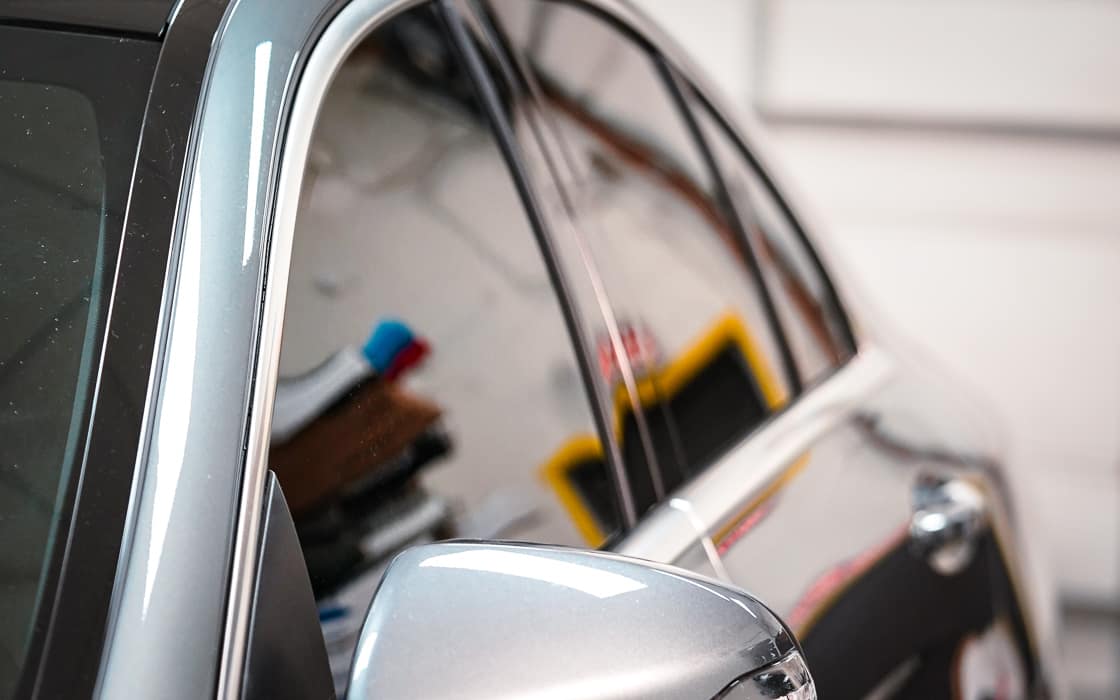
Ceramic tint is the kind of upgrade that feels small… until you drive on a hot day and go, “Oh. That’s what people meant.” Your seats stop trying to cook you. The sun still shines, but it loses the fight. You get shade without a cave-dark look, and your phone still works like normal. In Chicago, we see drivers pick ceramic after one summer of traffic. Once you try it, it’s hard to go back. This guide breaks down what it is, why it costs more, and when it makes sense.
Our packages Recent reviews
What is Ceramic Window Tint?
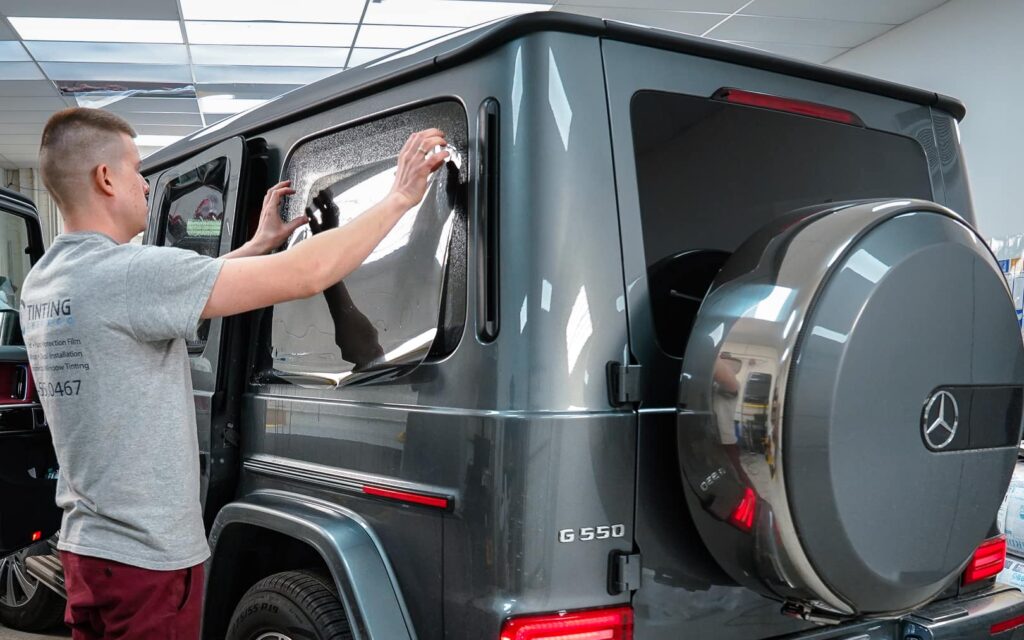
Ceramic tints are the most technologically advanced on the market. Their surface is coated with microscopic ceramic particles, giving these films extra strength and the ultimate protective properties. Ceramic particles are non-metallic, so they don’t conduct heat, fade over time, or interfere with the transmission of phone signals, GPS, and Wi-Fi.
Ceramic tints reduce glare without the need for a very dark shade and make car windows more resistant to scratches and breakage. Ceramic films are usually referred to as the “gold standard of window tinting,” and they are more expensive than the other kinds.
Check the table below for details. Secure your spot by clicking.
Book appointment- Windshield Strip: $70–$200 (based on film)
- Sunroofs: $70–$500 (per panel/size)
- Tint Removal: $120/hr labor rate
| View all packages | XPEL CS | XPEL XR | XPEL XR+ |
| 2 front side windows | from $109 | from $149 | from $209 |
| coupe, 4-door sedan, sides and rear window | from $249 | from $379 | from $609 |
| SUV/Pickup, sides and rear window | from $279 | from $409 | from $659 |
| windshield for Coupe/Sedan | from $169 | from $219 | from $339 |
| windshield for SUV/Pickup | from $169 | from $219 | from $339 |
| Optional Add-ons: |
|||
| Note: 20+ year old vehicles ($100 surcharge) | |||
| 1000+ reviews |
Why Do So Many Drivers Choose Ceramic Tinting?
This is the highest quality and most expensive tinting film. It contains no metal, dye, or carbon, only ceramic particles that are non-conductive and non-magnetic.
Ceramic film has only recently appeared on the market, but it has already proven itself in terms of performance and reliability. Ceramic tinting blocks 45% to 50% of the sun’s heat that penetrates through windows in the form of infrared radiation, while providing maximum visibility day and night.
Like carbon film, ceramic film does not interfere with the operation of radios, mobile phones, GPS navigators, and other similar devices indoors. It outperforms other types in terms of resistance to fading and glare, and also makes windows more impact-resistant.
Ceramic film is also the most effective at blocking ultraviolet light; it can block up to 99% of UV rays (the rays that cause sunburn and skin cancer).
Why is it not just about aesthetics, but an investment in comfort and protection for your car?
Tinting is often perceived as merely an aesthetic element, but ceramic film offers real perks:
- Does not fade or lose transparency.
- Does not contain metal particles, so it does not interfere with GPS, radio communication, or mobile Internet.
- Highly resistant to scratches and mechanical damage.
- Improves the overall appearance of the vehicle.
- Complements any body color.
- Highlights the contours and lines of the vehicle.
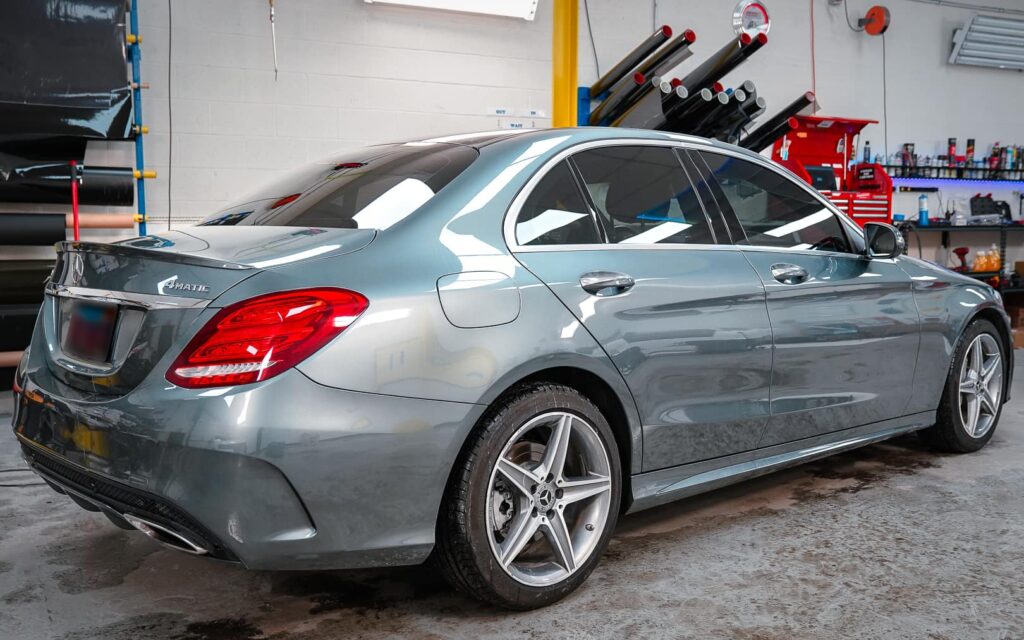
Benefits of Ceramic Tints
Let’s take a look at why many car owners in Illinois and other states prefer this type of window tinting.
Ceramics Reflect Everything!
The best of modern advanced technologies is ceramic window tinting. This thin film uses non-conductive, non-metallic ceramic nanoparticles, which are so tiny that their size is measured in nanometers, and they are sprayed onto the film. These microscopic particles have spectral selectivity, meaning they are capable of absorbing and deflecting certain wavelengths of light.
This is not just a film that absorbs heat; this enhanced film actually reflects most of the infrared spectrum.
Excellent Visibility
Ceramic tints are distinguished by their high quality and optical transparency. The nanoparticles are so small that they are practically invisible and do not scatter light. As a result, you get a clearer and sharper view of the road, especially at night or in poor weather conditions, such as rain. Ceramic tinting is the undisputed winner among drivers who need maximum visual acuity.
No Interference with Signals
Ceramic particles do not contain metal, so the film does not interfere with GPS, mobile phones, radios, or other electronic devices.
Verified by Car Owners
More and more cars are leaving our Tinting Chicago store with ceramic tinting. We receive hundreds of 10/10 reviews for this type of film. And we are not the only ones with this experience, because in hot Arizona and Florida, ceramic films are even more in demand.
Here’s what one Reddit user has to say:
“I just got my car done with ceramic a few weeks ago and it makes a huge difference. I like the fact that it also blocks ultraviolet light. I would go for the ceramic if you can swing the extra cost. It might be a little more, but it’s one of those things you only do once in the lifetime of a car (unless you keep your car a long ass time) so it’s worth it to get the best imo.”
Drawbacks of Ceramic Window Film
Ceramic tint is not perfect. First, the price is higher than dyed, metallic, or carbon film. You pay more for better heat control and clearer views. Second, not every “ceramic” film is truly high quality. Some cheap brands use the word as a sales trick, then the film looks hazy or does not block much heat.
Install also matters a lot. Ceramic film can show dust or fingers if the shop rushes. A clean install takes time and skill.
Last, ceramic tint will not turn your car into an icebox. It helps a lot, but your black leather seats can still get hot. Think of it like sunscreen for your car, not a magic spell. If it was a magic spell, we would tint our own fridge too.
The Difference Between Ceramic and Standard Film
There are many types of tinting films on the market, but not all of them have the same characteristics. Conventional film, made from dyed polyester or metallized layers, only performs basic functions of darkening and protecting from sunlight. However, it has a number of disadvantages:
- Fading and discoloration over time – standard films lose their color saturation, becoming cloudy or acquiring a purple tint.
- Poor heat protection – most traditional films do not have high thermal insulation properties.
- Signal interference – metallized films can interfere with radio signals, GPS, and cellular communications.
Ceramic tinting does not have these disadvantages. Thanks to the use of nanoceramic particles, the film retains its transparency and color for years, does not interfere with the operation of electronic devices, and provides high heat protection without metal components.
More Facts About Ceramic Tints
Many drivers think heat control only comes with dark glass. Not true. For example, XPEL PRIME XR PLUS 70% (a pretty light shade) still shows 52% TSER and 92% IR rejection on the spec sheet.
“IR%” is not the whole story. Shops and brands love to talk about infrared rejection, but heat is more than IR. TSER (Total Solar Energy Rejected) is a bigger picture number.
Moreover, after install, the film needs time to set. 3M says initial adhesion takes at least 48 hours, and full adhesion can take up to 30 days. So if you see a little haze early on, don’t panic.
Lastly, yes, UVA can get through plain glass. Regular window glass blocks most UVB, but UVA can still pass through. That’s one reason tint matters even on “normal” sunny days.
Conclusion
Choose ceramic tinting if you live in a hot climate and need the best heat rejection technology available. It’s also a great choice if you’re willing to pay for a higher level of comfort and less weight in your air conditioner. You’ll also get optimal optical clarity, especially for driving at night.
However, make sure you get the film from a professional installer who uses high-quality film and offers a warranty. Otherwise, you may end up wasting a lot of money.